
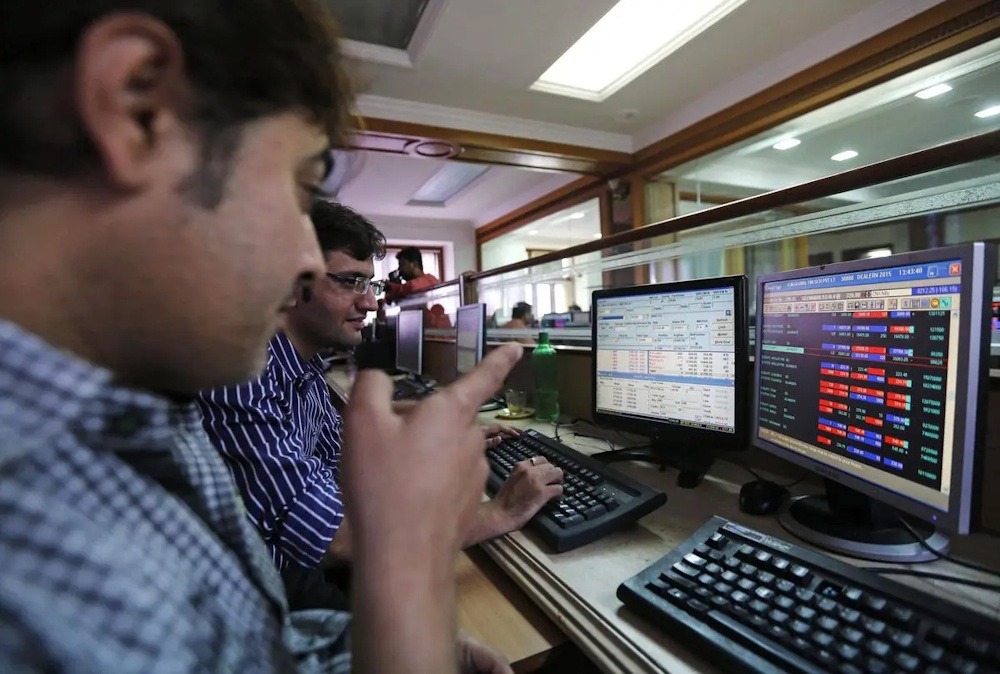
The SGX Nifty March 2026 futures increased by 58.50 points, indicating a slightly optimistic start for the Nifty 50 today.
Institutional Flows:
On 13 March 2026, provisional data indicated that foreign portfolio investors (FPIs) divested shares amounting to Rs 10,716.64 crore, whereas domestic institutional investors (DIIs) recorded net purchases totaling Rs 9,977.42 crore in the Indian equity market. Foreign institutional investors have divested shares totaling Rs 56,883.22 crore in March (up to 13 March 2026). This comes after their cash sales of Rs 6,640.78 crore in February and Rs 41,435.22 crore in January 2026.
Global Markets:
On Monday, Asian markets experienced a decline as investors evaluated the impact of rising oil prices alongside the recent updates regarding the intensifying U.S.-Iran conflict. U.S. crude prices have surpassed $100 per barrel as the Trump administration considers military action against Tehran’s Kharg Island, a crucial location frequently described as Iran’s “oil lifeline.” On Friday, President Donald Trump reportedly issued orders for strikes targeting Iranian military assets on Kharg Island, cautioning of potential additional attacks on the crude facilities situated in that region. Mike Waltz, the U.S. ambassador to the United Nations, reiterated the warning on Sunday, according to media reports. A global research house indicates that a rise in energy prices due to the conflict in Iran may reduce global GDP by approximately 0.3% in the coming year, concurrently elevating headline inflation by around 0.5% to 0.6%.
Anticipated increases in natural gas prices are likely to contribute to additional inflationary pressures and hinder growth, especially in Europe and Asia. The potential for more significant effects is heightened if the Strait of Hormuz remains closed, according to reports from the research firm. In terms of data, retail sales in China for the initial two months of the year increased by 2.8% compared to the same period last year, surpassing the widely anticipated forecast of 2.5% growth. However, this represents a significant deceleration from the 4% growth observed in the January-February period of 2025. Industrial output increased by 6.3%, surpassing the widely anticipated growth of 5%. Industrial production has shown relative strength in the world’s second-largest economy, driven by robust external demand, especially from European and Southeast Asian countries.
On Wall Street, US stocks ended the day in negative territory on Friday, even though there was a brief period of recovery and optimism following the opening bell. The S&P 500 declined by 0.61%, now standing 5% beneath its recent peak, with a closing value of 6,632.19. The Nasdaq Composite experienced a decrease of 0.93%, closing at 22,105.36. The Dow Jones Industrial Average declined by 119.38 points, representing a decrease of 0.26%, closing at 46,558.47. Increasing oil prices linked to geopolitical tensions have impacted market sentiment, leading to a cautious approach among investors. In a notable development, a federal judge on Friday dismissed the Justice Department’s effort to subpoena Federal Reserve Chair Jerome Powell, marking a considerable legal triumph for the central bank.
A ruling from US District Judge James Boasberg indicated that the subpoenas issued by US Attorney Jeanine Pirro were deemed improper and seemed to carry political motivations. On Friday, mortgage rates reached their peak since September, driven by an increase in bond yields amid rising tensions associated with the conflict in Iran. Media reports indicate that the average rate on a 30-year fixed mortgage has reached 6.41%. Mortgage rates generally follow the trends of the 10-year US Treasury yield, which saw an uptick again on Friday, leading to the most recent rise in borrowing expenses.
Domestic Market:
The primary equity indices closed significantly lower on Friday, continuing their pronounced decline for the third straight session. Market sentiment continued to exhibit significant fragility, influenced by ongoing selling pressure from foreign institutional investors, a notable rise in crude oil prices, and escalating geopolitical tensions as the conflict in the Middle East reached its 14th day. Brent crude remained near the significant $100-per-barrel threshold, heightening investor concerns and contributing to a decline in market confidence.
The Nifty finished under the 23,200 mark, influenced by significant selling pressure in the metal, PSU banking, and auto sectors. The S&P BSE Sensex experienced a decline of 1,470.50 points, representing a decrease of 1.93%, closing at 74,563.92. The Nifty 50 index experienced a decline of 488.05 points, representing a decrease of 2.06%, closing at 23,151.10. Over the course of three consecutive trading sessions, the Sensex experienced a decline of 4.65%, whereas the Nifty recorded a decrease of 4.57%.