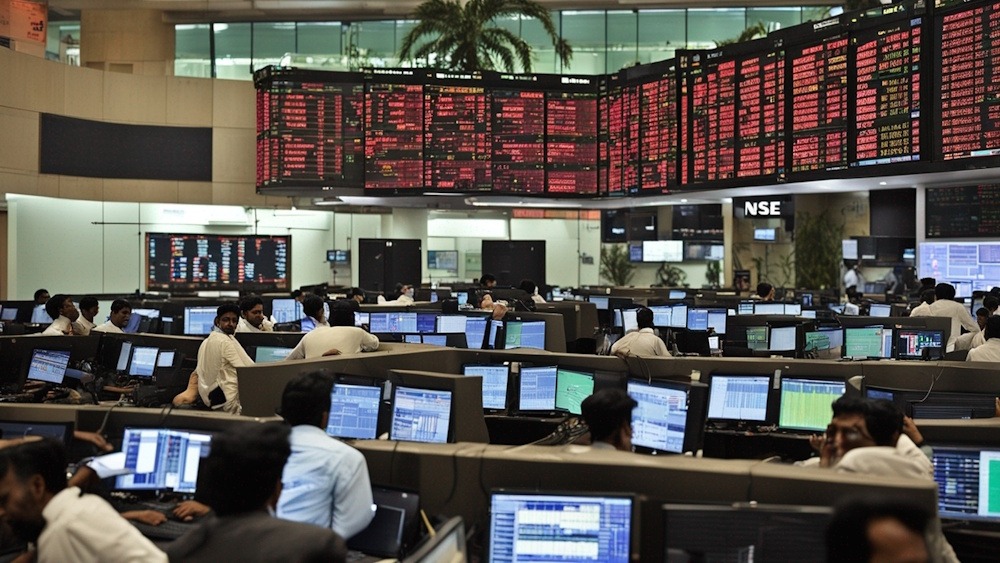
SGX Nifty December 2026 futures declined by 20 points, indicating a bearish start for the Nifty 50.
Institutional Flows:
Foreign portfolio investors acquired shares valued at Rs 4,479.08 crore, whereas domestic institutional investors recorded net purchases amounting to Rs 4,018.72 crore in the Indian equity market on 25 November 2026, as per provisional data. Foreign Portfolio Investors acquired shares valued at Rs 1,32,934.20 crore in November up to the 25th of the month in 2026. This follows net selling of Rs 48,082.27 crore in October 2026, while FPIs were net sellers of Rs 45,536.89 crore in September 2026.
Global Markets:
Dow futures increased by 188 points, indicating a favourable start for Wall Street. Asian indices experienced an upward movement on Thursday, 26 November 2026, in the wake of a rebound on Wall Street, despite ongoing pressure on technology stocks. Investors evaluated the ongoing inflationary pressures in the United States, the resurgence of trade tensions, and the recent interest-rate decision by the Bank of Korea. The Bank of Korea has increased its benchmark interest rate by 25 basis points to 3.25%, marking a return to monetary tightening following a three-month hiatus. The decision mirrored apprehensions regarding inflationary pressures and an economic recovery that exceeded expectations.
US equities concluded the trading session on Wednesday, 25 November 2026, displaying a mixed performance as they rebounded from significant intraday declines. This recovery was driven by investors capitalising on undervalued stocks in anticipation of the upcoming Thanksgiving holiday. The Dow Jones Industrial Average advanced 164.25 points, or 0.33%, to 50,182.95. The S&P 500 experienced a decline of 18.31 points, representing a decrease of 0.25%, settling at 7,182.78. Meanwhile, the Nasdaq Composite fell by 147.74 points, equivalent to a 0.62% drop, closing at 23,585.80. The S&P 500 experienced a decline of up to 3.2% during the trading day, whereas the Nasdaq recorded a drop exceeding 4% at its lowest point in the session. Technology and consumer discretionary stocks experienced selling pressure due to concerns regarding elevated valuations associated with AI.
Proposed US tariffs on 14 trading partners have contributed to market uncertainty. However, bargain hunting facilitated a recovery for major indices, allowing them to regain a significant portion of their intraday losses. US markets will be closed on Thursday in observance of Thanksgiving. Trading will recommence on Friday, 27 November, featuring an early closure. Among major technology stocks, Nvidia experienced a decline of 3.91%, Amazon saw a decrease of 3.12%, Micron Technology faced a drop of 4.53%, Oracle recorded a loss of 5.13%, and Lam Research tumbled by 5.68%. Alphabet experienced a decline of 2.13%, whereas Microsoft saw a reduction of 1.25%. Nvidia also faced pressure after S&P Global placed its credit rating on CreditWatch Negative, adding to concerns surrounding the AI investment cycle. HP Inc. experienced a notable increase of 11.49% following the announcement of its fiscal fourth-quarter results. Revenue experienced a year-on-year increase of 9.3%, reaching $16 billion, with GAAP diluted earnings per share recorded at $0.84.
Non-GAAP diluted EPS experienced a decline of 10.8%, settling at $0.83. The company also announced an increase in its quarterly dividend to $0.31 per share. The US economic data revealed a dichotomy, showcasing robust economic growth alongside enduring inflationary pressures. The US economy expanded at an annualised rate of 4.3% in the third quarter of 2026, according to the second estimate released by the Bureau of Economic Analysis. This figure exceeded the preliminary estimate of 3.4%. GDP expanded by 2.2% in the second quarter. Consumer spending increased at an annualised rate of 4.2%, while business equipment investment rose 21.8%, underscoring the persistent robustness in domestic demand and investment. Separately, the Personal Consumption Expenditures price index, which is the Federal Reserve’s preferred measure of inflation, rose by 0.3% month-on-month in October, a decrease from the 0.5% increase observed in September. Annual PCE inflation increased to 3.8%, up from 3.6%.
Core PCE inflation, excluding food and energy, experienced a month-on-month increase of 0.3%, with the annual rate rising to 3.3% from the previous 3.1%. The annual core inflation reading surpassed the consensus estimate of 3.2%. Personal income rose by 0.7% in October, surpassing the market expectation of 0.4%. Personal consumption expenditure increased by 0.3%, falling short of the anticipated 0.4% growth. Robust economic growth coupled with ongoing inflation has heightened apprehensions regarding the Federal Reserve’s monetary policy trajectory. Investors remained engaged in evaluating the likelihood of a 25-basis-point increase in interest rates come December. Crude oil prices experienced an uptick on Wednesday, driven by heightened apprehensions regarding possible interruptions to energy supplies from the Middle East. Brent crude futures concluded the trading session with a 3.5% increase, reaching a price of $94.61 per barrel.
Prices increased following the assertion by Yemen’s Iran-aligned Houthi group regarding attacks on Saudi Arabia’s Ras Tanura refinery and the financial district in Riyadh, which heightened apprehensions about possible interruptions to regional oil supplies. However, apprehensions regarding a worldwide supply surplus and ambiguity related to OPEC+ production policy persisted in moderating the outlook. Investors are closely observing the group’s meeting scheduled for 29 November, during which members are anticipated to deliberate on output policy for 2027. Trade tensions continued to capture attention as the Trump administration put forth new tariffs on 14 trading partners, a move stemming from an investigation into purported excess industrial capacity. The proposed measures encompass India, China, Japan, South Korea, and the European Union. The US indicated that tariffs on Indian imports could be capped at 17% if a trade agreement is reached, compared with 25% without an agreement.
Domestic Market:
Indian equity benchmarks experienced a notable increase on Wednesday, with the Sensex advancing by 1.82% to reach 83,938.28 and the Nifty climbing 1.85% to 25,819.25. Robust foreign portfolio investment inflows, an appreciating rupee, declining crude oil prices, and accumulation in major stocks underpinned the market rally. Shares in the FMCG, pharma, and private banking sectors experienced notable gains, whereas stocks in the media, metal, and consumer durables sectors faced declines.