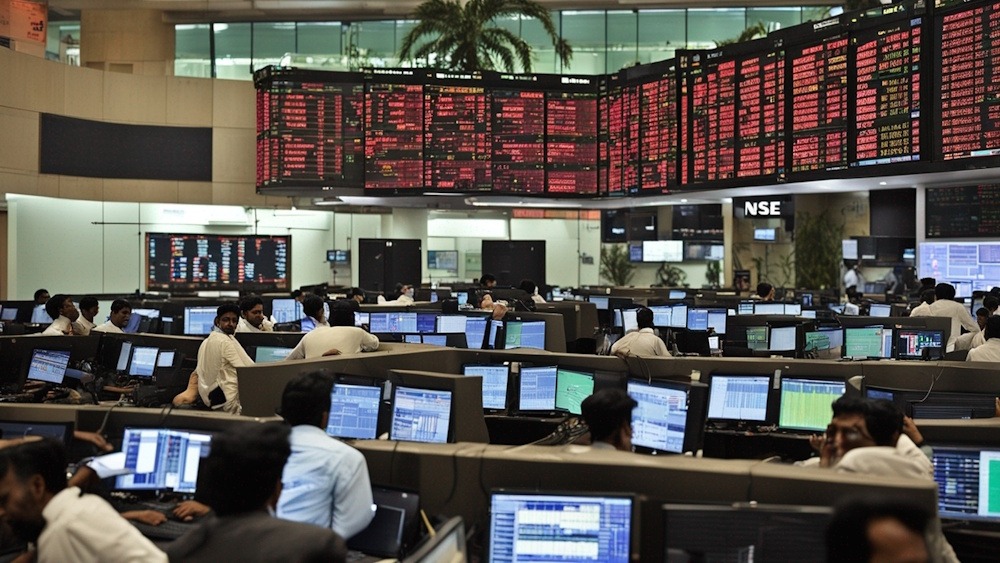
SGX Nifty November 2026 futures declined by 131 points, indicating a subdued start for the Nifty 50. Asian shares continued to decline following a downturn on Wall Street, driven by apprehensions regarding high AI valuations and the trajectory of US interest rates, which has contributed to a dampened global market sentiment.
Institutional Flows:
Foreign portfolio investors acquired shares valued at Rs 7,411.41 crore, whereas domestic institutional investors recorded net sales amounting to Rs 1,356.57 crore in the Indian equity market on 19 November 2026, as per provisional data. Foreign Portfolio Investors acquired shares valued at Rs 1,06,358.66 crore in November up to the 19th of that month in 2026. This follows net selling of Rs 48,082.27 crore in October 2026, while FPIs were net sellers of Rs 45,536.89 crore in September 2026.
Global Markets:
Asian equities experienced renewed selling pressure on Friday, driven by concerns regarding elevated valuations in artificial intelligence and the outlook for US interest rates, which negatively impacted investor sentiment. Japan’s core inflation rose to 2.2% in October, up from 2.1% in September, continuing to exceed the Bank of Japan’s 2% target for the second month in a row. The data reinforced anticipations of a potential interest rate increase at the central bank’s December meeting. The weakness followed a sharp sell-off on Wall Street, where investors continued to reduce their exposure to technology and AI-linked stocks. Anthropic’s robust entry into the Nasdaq did not enhance the overall risk appetite, as apprehensions regarding data-center expenditures, funding necessities, and the prospective returns on AI investments continued to loom.
US stocks experienced widespread declines on Thursday, 19 November, as the sell-off related to AI intensified. The Dow Jones Industrial Average experienced a significant decline of 1,101.11 points, representing a decrease of 2.19%, closing at 49,097.06. The S&P 500 experienced a decline of 147.80 points, representing a decrease of 2.02%, closing at 7,175.83. This marks the continuation of its losing streak, now reaching six consecutive sessions. The Nasdaq Composite experienced a decline of 550.68 points, equivalent to a decrease of 2.25%, closing at 23,879.20. Over 90% of S&P 500 constituents concluded the trading session in negative territory. The Russell 2000 index of small-cap stocks experienced a decline of 2.18%, closing at 2,655.11. The S&P 500 stood approximately 8.2% beneath its peak established the previous month.
Anthropic shares concluded their inaugural trading session at $97.17, reflecting a 17.1% increase from the initial public offering price of $83. The stock commenced trading at $111.50 and experienced a brief ascent to $115 before relinquishing a significant portion of its early gains. The offering raised approximately $81 billion, establishing it as the largest IPO on record. Despite the robust debut, the listing did not succeed in elevating the broader technology stocks. Chipmakers and AI-linked companies continued to face significant pressure. Advanced Micro Devices experienced a decline of 7.7% following the announcement by short-seller Hunterbrook regarding a short position in the firm. Nvidia experienced a decline of 3.3%, representing its sixth consecutive session of losses. Micron Technology and Broadcom experienced a decline of 2.1% each. Cloud infrastructure companies CoreWeave and Nebius experienced declines of 6.1% and 9.4%, respectively.
Palo Alto Networks defied the general market downturn, experiencing a 6.4% increase following an upward revision of its fiscal 2027 revenue guidance. Walmart experienced a decline of 1% following the release of an annual sales forecast that fell short of market expectations. Williams-Sonoma experienced a decline of 15.2% in response to disappointing comparable sales growth. US labour market data indicated that initial jobless claims increased to 203,000 in the week ending 14 November, up from a revised figure of 202,000 in the preceding week. The figure surpassed the market expectation of 198,000. Continuing claims rose to 1.763 million, up from a revised figure of 1.693 million. The Philadelphia Federal Reserve’s manufacturing index declined to 6.3 in November, down from 20.9 in October, significantly underperforming the market expectation of approximately 20. The reading indicated a deceleration in regional manufacturing activity. Meanwhile, the prices-paid component rose to 58.2 from 43.2, signalling heightened input-cost pressures.
The Federal Reserve’s October meeting minutes and subsequent comments from policymakers have continued to influence interest-rate expectations. Markets were anticipating a significant likelihood of a 25-basis-point rate increase at the December meeting. Chicago Fed President Austan Goolsbee indicated that inflation has not yet established a definitive trajectory toward the central bank’s 2% target and cautioned that investments related to AI could exacerbate price pressures. In commodities, January Brent crude futures concluded the trading session with an increase of 3 cents, reaching a price of $91.98 per barrel on Thursday. Prices exhibited volatility as apprehensions regarding possible shipping disruptions in the Persian Gulf counterbalanced the increase in US inventories and the anticipation of a global supply surplus. US crude inventories rose by 3.4 million barrels in the week ending 13 November, surpassing forecasts that anticipated an increase of approximately 1 million barrels.
Domestic Market:
Indian equity benchmarks experienced a notable rally on Thursday, as the Sensex surpassed the 83,000 mark for the first time since the onset of the Iran war, while the Nifty climbed above 25,500, buoyed by ongoing foreign institutional buying. Foreign Institutional Investors have continued their buying trend for 13 consecutive sessions, pushing the net purchases for November beyond Rs 1 lakh crore. A significant decline in industrial metal prices has resulted in an uptick in auto and consumer durables stocks, driven by anticipations of reduced input costs.
Concurrently, stable crude oil prices and a robust rupee, approaching a seven-month peak, have further enhanced market sentiment. Broader markets also advanced, although IT stocks continued to face pressure due to concerns regarding the sustainability of AI-related investments. The Sensex increased by 989.94 points, representing a rise of 1.21%, reaching a level of 83,021.75. Meanwhile, the Nifty experienced an uptick of 286.35 points, or 1.14%, bringing it to 25,514.30.